 HOME
Communications of the Byurakan Astrophysical Observatory (ComBAO)
Volume 73, Issue 2, Nov 2026
ORIGINAL PAPERS
Relationship between optical stellar flares and infrared variability: I. Cross-matching the TESS, Kepler and K2 flare catalogues with WISE/NEOWISE single-exposure photometry  0.7 MB
A. Akopian, G. Kostandyan, and D. Baghdasaryan
Pages: 227-248
Abstract. Nearly everything that space photometry has taught us about flares of late-type stars has been obtained in the visible range. We present a program and first results of a systematic cross-match of the TESS (three samples, about 150 000 events on ∼15 000 stars), Kepler (79 000 events, 1742 stars) and K2 (2600 events in the Pleiades, Hyades and Praesepe) flare catalogues with the infrared photometry of the WISE/NEOWISE surveys (3.4 and 4.6 μm, 2014–2024). The observing geometry of TESS and WISE drastically reduces the area of the sky where simultaneous observations are possible, although each telescope alone covers the entire sky. For every star, we determine the quiescent infrared level from hundreds of exposures, measure the deviations from it around each flare, and select events by shape and quality. Preliminary 95% upper limits on the flare-averaged infrared brightening within ±0.2 d of the flare peak at 3.4 μm are 4.9 mmag (Kepler × AllWISE, 129 flares) and 0.96 mmag (TESS × NEOWISE, 796 flares); a slow, brightness-dependent drift of the NEOWISE photometry, which imitates a mean dimming of several mmag at the flare times if the quiescent level is taken over the whole mission, is identified and allowed for. In addition, we identify stars for which NEOWISE, at its 95-minute cadence, reproduces the eclipses and rotational modulation seen by TESS (correlation up to 0.98), as well as spurious catalogue flares located at eclipse edges.
Towards a Machine-Learning Census of Compact Stellar Objects in the Digitized First Byurakan Survey: Data, Gap and Project Plan 0.2 MB
G. Paronyan , M. Rah, S. Khachatryan, V. Mnatsakanyan, G. Mikayelyan, and A. Mickaelian
Pages: 249-256
Abstract. The Digitized First Byurakan Survey (DFBS) provides low-dispersion spectra in the range 3400-6900 Å for about 20 million objects. Its stellar content has been explored by visual selection of individual classes and by three automated studies based on image patches or spectral templates; none of these released a catalogue of classified objects or used Gaia or high-energy data. We describe a two-stage project, supported by the ANSEF Yervant Terzian 2026 Award, that addresses this gap for compact stellar objects. We first audit the plate table used for the spectrum extraction: it lists 1643 unique plates with 23.2 million object entries, 17 emulsion labels and 277 fields observed more than once, and it has no plate centres between δ = +48.9o and +62.7o. Stage 1 will build a catalogue of unique DFBS objects cross-identified with Gaia DR3 and classify them using three machine-learning branches combined by late fusion. Stage 2 will add X-ray, γ-ray, radio, and century-long photographic photometry to select white dwarfs, hot subdwarfs, cataclysmic variables, and neutron-star binaries. Each stage ends with a public catalogue.
INTRODUCTION 0.1 MB
Editorial Board
Pages: 257-258
Byurakan Astrophysical Observatory (BAO): 80 years of outstanding achievements 0.2 MB
A.M. Mickaelian and H.V. Abrahamyan
Pages: 259-272
Abstract. The Byurakan Astrophysical Observatory (BAO) is one of the most famous observatories of the Former Soviet Union, Middle East, as well as of the whole world. It was founded in 1946 by the outstanding scientist Viktor Ambartsumian (1908-1996) and became the leader of studies on instability phenomena in the Universe. Many discoveries have been carried out at BAO related to stars, star clusters and other systems, nebulae, galaxies and systems of galaxies. BAO has two major instruments; 1m Schmidt and 2.6m classical telescopes. Together with V. Ambartsumian, outstanding scientists Beniamin Markarian, Grigor Gurzadyan, Marat Arakelian and others have worked at BAO. Many important international meetings and schools for young astronomers have been held. Many important people, including State authorities, Nobel Prize Winners and others have visited BAO. BAO has statuses of RA National Value (since 2013), IAU South West and Central Asia Regional Astronomical Centre (since 2015), IAU Outstanding Astronomical Heritage (OAH, since 2021), it has UNESCO Documentary Heritage item (since 2011), its garden is recognized as Arboretum (2017), and there is RA National Hero Viktor Ambartsumian’s house-museum (since 1998). BAO is also Scientific (Astro) Tourism centre recognized by the IAU and Armenian Institute of Tourism (AIT).
From global estimates to longitudinal asymmetries: a multi-tracer view of the Galactic Star Formation Rate 0.1 MB
D. Elia and N. J. Evans
Pages: 273-280
Abstract. The Star Formation Rate (SFR) of the Milky Way can be measured from Hi-GAL far-infrared photometric data in two ways: from the masses of compact sources (clumps), or from the extended 70 μm emission assigned the distance of the nearest dense clump. It can also be derived independently from the physical properties of CO molecular clouds. The total SFR and its radial distribution based on these three different methods show remarkable agreement, and the total SFR (∼ 1.4 − 1.7 M⊙ yr−1) agrees with independent measurements. This result allows consideration of non-axisymmetric structures, using a plot of the longitude dependence of the SFR. An East-West (fourth quadrant versus first quadrant) asymmetry clearly appears, with an excess for ℓ ≤ 40◦ and negative dips at 40◦ ≤ ℓ ≤ 74◦, ruling out a purely circular axisymmetric distribution.
Variable Stars in Clusters and Beyond 4.4 MB
A. S. Hojaev
Pages: 281-291
Abstract. Variable stars provide direct probes of stellar structure, magnetic activity, accretion, binary interaction, and stellar evolution. Their interpretation becomes especially powerful when they are studied in open clusters and stellar associations, where common distance, age, and approximately common initial chemical composition provide an environmental framework. Field variables, in turn, extend the comparison to older populations and rare or transient systems that are not readily sampled in clusters. This review outlines the historical foundations of cluster-variable research at the Byurakan Astrophysical Observatory (BAO), summarizes the complementary roles of cluster and field studies, and discusses the opportunities created by wide-field time-domain surveys and space photometry. We focus on our observational programme and recent results from the Uzbek–Indian collaboration, including searches for variables in open clusters and monitoring of selected active systems beyond clusters. The review emphasizes results traceable to original publications and distinguishes refereed research papers from conference summaries and preliminary candidate lists.
Simultaneous optical and mid-infrared observations of stellar flares: the overlap of TESS, Kepler and K2 with WISE 0.2 MB
A. Akopian, G. Kostandyan, and D. Baghdasaryan
Pages: 292-297
Abstract. Space photometry has recorded hundreds of thousands of stellar flares in a single visible band, while at 3–5 μm simultaneous measurements have been lacking. The WISE/NEOWISE survey, with its 7.7-s exposures at 3.4 and 4.6 μm repeated every 95 min for a day or two twice a year during 2014–2024, is the only archive that can supply them for thousands of stars. We examine where and how often such exposures coincide with the flares catalogued by TESS, Kepler and K2, by cross-matching five catalogues against the individual NEOWISE and AllWISE measurements. The pointing rules of the missions leave no common sky at intermediate ecliptic latitudes: coincidences are confined to the ecliptic poles, to the ecliptic itself during the few TESS sectors pointed along it, to two AllWISE passes over the Kepler field, and to one WISE pass per K2 campaign. We give the resulting statistics, the precautions that the cross-match requires (proper motions, the drift of the NEOWISE photometry), a first methodological upper limit on the flare-averaged infrared response, and examples of what the single exposures reveal: a candidate infrared response to a flare, eclipses and spots followed in the infrared, and spurious catalogue flares at eclipse edges.
Dust in Stellar Populations: Grid-Based and Bayesian Spectral Energy. Distribution Fitting of AGB Stars with SEDust and MCM-SEDust 0.2 MB
H. Mahani, A.Javadi, and A. Rabiee
Pages: 298-303
Abstract. Dust shapes the spectral energy distributions (SEDs) of stellar populations on every scale, from the circumstellar envelopes of evolved stars to the interstellar medium of galaxies. We review the ingredients of stellar population synthesis (SPS) models: the initial mass function, stellar evolutionary tracks, stellar spectral libraries, and dust models. We then present SEDust, an automated pipeline that finds the best-fitting DUSTY radiative-transfer model for the SEDs of dusty asymptotic giant branch (AGB) stars, and MCM-SEDust, its extension. We discuss how both connect the physics of individual dusty stars to the dust budget of stellar populations.
Chasing the Ideal Thermal Tracer in the Galactic Center 0.3 MB
F. Mazoochi, F.S. Tabatabaei, J. Ott, V. Ossenkopf-Okada, A. Brunthaler, S. Dzib, and
Y. Gong
Pages: 304-309
Abstract. The innermost kiloparsec of galaxies plays a critical role in driving their evolution. As the nucleus of our Galaxy, the Central Molecular Zone (CMZ) serves as a unique local laboratory for examining star formation and gas dynamics under extreme physical conditions. Due to severe optical dust extinction, radio and infrared observations are essential to disentangle its thermal and nonthermal components. In this study, we evaluate the H67α radio recombination line (RRL) observed with the Australia Telescope Compact Array (ATCA) as an extinction-free tracer of ionized gas across Sgr A, Sgr B, and the Radio Arc. Comparing H67α with 1.3 GHz MeerKAT radio continuum data reveals that assuming local thermo-dynamic equilibrium (LTE) and optically thin conditions overestimates the thermal free-free emission in parts of the RRL-detected regions. By analyzing the H67α/H66α line ratio and radio spectral indices, we show that this thermal excess is primarily driven by stimulated RRL emission in Sgr B1, whereas non-zero optical depth and optically thick conditions dominate in Sgr B2. Accounting for these physical conditions, we derive a median thermal fraction of 57.7% at 1.3 GHz in the dense ionized regions of the CMZ.
Mass Loss Rates of Evolved Stars in Isolated Dwarf Galaxies 0.3 MB
N. Rostami and H. Mahani
Pages: 310-315
Abstract. We derive the mass-loss rates of asymptotic giant branch (AGB) stars in the isolated dwarf irregular galaxy NGC 6822 using SEDust, an automated pipeline that fits spectral energy distributions (SEDs) to estimate stellar mass-loss and dust-production rates. The total mass-loss rate of the AGB population is (3.7 ± 1.1) × 10−3 M⊙ yr−1. For a gas-to-dust ratio of 200, this corresponds to a dust injection rate of 2.0 × 10⁻⁵ M⊙ yr−1. If sustained over 10 Gyr, this rate would yield ≈ 2 × 10⁵ M⊙ of dust, which is lower than the dust mass of 2.7 × 10⁵ M⊙ estimated from Herschel observations. AGB stars alone, therefore, cannot account for the present-day dust reservoir of NGC 6822, and additional sources or processes, such as dust growth in the interstellar medium, are required.
A 15-year K-band view of long-period variables in the central region of M33 0.2 MB
H. Abdollahi, M. Alizadeh, F. Nikzat, A. Javadi, Yo. Abedini, and J. Th. van Loon
Pages: 316-321
Abstract. Long-period variables (LPVs) on the asymptotic giant branch (AGB) trace the late stages of stellar evolution and the return of mass to the interstellar medium. Their periods range from about 100 to 2000 d, so a few-year near-infrared campaign covers too few cycles for the slowest pulsators. We combine four independent UKIRT K-band data sets obtained between 2003 and 2018 into a homogeneous catalogue of the central ≈12 arcmin2 of M33: 847 stars with 21 085 measurements over 15.11 yr. Using 82 calibration stars, we place all data on the 2MASS/Vega system and remove inter-dataset offsets of up to 0.22 mag. Of the 847 stars, 771 are variable (σK > 0.10 mag), and 385 have peak-to-peak amplitudes AK ≥ 1.0 mag, which makes them Mira candidates. Of the 156 stars with Spitzer/IRAC [3.6] photometry, 120 have ⟨K⟩ − [3.6] > 0.5 mag and are candidate dust-enshrouded AGB stars. The catalogue is the basis for a forthcoming period–luminosity and star-formation history analysis.
TRGB Distances to the Andromeda Dwarf Satellites from the Isaac Newton Telescope Monitoring Survey 0.2 MB
H. Abdollahi
Pages: 322-327
Abstract. We measure tip of the red giant branch (TRGB) distances to 17 dwarf satellites of M31 from Sloan i-band photometry of the Isaac Newton Telescope (INT) monitoring survey of Local Group dwarf galaxies, and add the distances of And I, And VII and And IX from earlier papers of the survey. We locate the tip with a Sobel edge-detection filter applied to the luminosity function of stars within two half-light radii of each galaxy. The distance moduli range from 23.38 ± 0.06 mag (And XVI, 474 kpc) to 25.35 ± 0.06 mag (And XVIII, 1177 kpc), and 15 of the 20 satellites lie between 650 and 850 kpc. For most galaxies, our distance agrees with at least one published value. Compared with Conn et al. (2012), our tip is brighter for 12 of the 18 galaxies in common, by up to 0.39 mag, possibly because of crowding in the central regions. And XII lies at 844-38+40 kpc, about 60 kpc behind M31, consistent with a first infall into the Local Group. And XXII lies at 753-27+28 kpc, closer than all earlier estimates, and about 59 kpc from M33 in three dimensions (for an M33 distance of 794 kpc), consistent with an association with M33. And XVIII lies about 400 kpc behind M31, too far for a secure association with M31.
Cross-galaxy prediction of circumstellar OH masers: from the Milky Way to the Magellanic Clouds 0.2 MB
M. Faraji, J.Th. van Loon, and A. Javadi
Pages: 328-333
Abstract. Circumstellar 1612 MHz OH masers are associated with evolved stars undergoing intense mass loss. They are well studied in the Milky Way and confirmed in the Large Magellanic Cloud (LMC), but no circumstellar OH maser has yet been detected in the Small Magellanic Cloud (SMC). We present a machine-learning approach to identify new maser candidates in both Clouds. An XGBoost classifier is trained on Galactic evolved stars from the Hamburg database of circumstellar OH masers, using photometric colours from Gaia, 2MASS and WISE as the only input features. To transfer the model to the Magellanic Clouds, we apply an unsupervised, band-by-band median alignment of the photometric distributions. On a held-out Milky Way test set, the classifier reaches an area under the ROC curve (AUC) of 0.85, and on an independent sample of confirmed LMC detections and non-detections, the two classes are fully separated (AUC = 1.00). We present ranked candidate lists for the LMC and SMC and refine them with independent OGLE-III variability and chemical classifications, retaining oxygen-rich Mira variables as the most promising targets for radio follow-up.
Detection of Open Cluster Morphology Using Machine Learning Methods 0.2 MB
M. Noormohammadi and A. Javadi
Pages: 334-338
Abstract. Detecting cluster morphology is crucial for studying the formation and evolution of clusters and the interaction between galaxies and clusters. Achieving this requires accurate data and a reliable method to identify cluster members both inside and beyond the tidal radius. Machine learning techniques, combined with Gaia data releases, offer a valuable opportunity for determining cluster membership beyond the tidal radius, providing a detailed view of cluster morphology. In this study, we employed three machine learning algorithms to identify reliable cluster members using Gaia Data Release 3. First, we applied DBSCAN to detect cluster member candidates based on parallax and proper motion. Next, we used Gaussian Mixture Models to refine the selection within the tidal radius by incorporating positional, proper motion, and parallax data. To identify members beyond the tidal radius, we trained a Random Forest model using members detected by DBSCAN and GMM. The Random Forest classifier was applied based on proper motion, parallax, G magnitude, and the BP-RP color index. By integrating these three machine learning algorithms, we successfully identified both cluster members and escapees within and beyond the tidal radius. This approach enabled us to analyze cluster morphology over a wide field of view extending from the cluster center.
Compact Planetary Nebulae as Laboratories of an Unstable Universe 0.4 MB
S. Yalgın
Pages: 339-345
Abstract. Planetary nebulae provide a direct view of stellar matter in transit from stars to the interstellar medium, capturing stellar evolution in the act of Galactic recycling. Originating from low- and intermediate-mass stars, they constitute an important source of chemically enriched gas and dust in the Galaxy. While their progenitor stars evolve over timescales of millions to billions of years, the planetary nebula phase remains observable for only a few tens of thousands of years. As the central star evolves toward higher temperatures, the ionization structure, density distribution, and dust properties of the nebula respond to a continuously changing radiation field. Their rapidly evolving nature makes planetary nebulae powerful tracers of the dynamic Universe. We investigate a sample of 18 well-characterized compact planetary nebulae, focusing on their dust properties and evolutionary status using published photoionization models. By combining published optical, infrared, and radio observations with model inputs, we reconstruct their spectral energy distributions without refitting and examine the gas and dust properties in relation to stellar mass loss and the recycling of matter into the interstellar medium. Finally, we discuss the implications of the derived gas and dust properties for the planetary nebula missing-mass problem.
Towards Synthetic Training Samples for Multiple Stars: Structure of the Main Sequence 0.1 MB
I.V. Chapaeva
Pages: 346-349
Abstract. The volume of modern observational data on binary and multiple stars makes manual analysis impractical, so it is reasonable to apply artificial-intelligence methods. Obtaining training samples for such methods is not easy: data taken directly from telescopes and databases are unlabeled, while data from numerical simulations do not reproduce observational errors and selection effects. The key task is therefore to create suitable training samples for binary and multiple stars, and as a solution, it is proposed to use synthetic samples that preserve the statistical properties of real observational data. This paper considers the method of obtaining synthetic training samples using one example, as well as a side result produced by this method, namely the inhomogeneous structure of the main sequence. In the longer term, analysing a large number of real distributions will allow a large synthetic training sample to be assembled, and this work may stimulate wider study of the physical causes behind the distributions of multiple stars.
Distance and Extinction Effects on the LPV-Based Star Formation History of M31 0.1 MB
S. Ghaziasgar and M. Torki
Pages: 350-352
Abstract. We investigate how the adopted distance and extinction affect the star formation history (SFH) of M31 derived from long-period variable stars (LPVs). Using a sample of 1,149 LPVs, we test three distance moduli (μ0 = 24.40, 24.47, and 24.54 mag) and three additional visual extinction values (∆AV = 0.0, 0.1, and 0.2 mag). Changes in the distance modulus affect the inferred star formation rate more strongly, particularly for young stellar populations, whereas the tested extinction variations produce smaller changes. Nevertheless, the overall shape and main features of the reconstructed SFH remain broadly similar across all cases. These results emphasize the importance of adopting consistent distance and extinction corrections when comparing LPV-based SFHs.
Environmental Dependence of the Galaxy Mass–Size Relation from HST and JWST Observations 0.3 MB
M. Armand and M. Mosleh
Pages: 353-358
Abstract. Understanding whether galaxy structural evolution is primarily driven by internal processes or influenced by the surrounding environment remains a key question in galaxy evolution. We investigate the environmental dependence of the mass-size relation and structural properties of star-forming and quiescent galaxies using complementary observations from HST and JWST over the redshift range (0.5 < z < 3.0). The first analysis is based on approximately 3,000 galaxies observed with HST, where structural parameters are measured from two-dimensional stellar mass maps, minimizing the effects of color gradients and spatial variations in the stellar mass-to-light ratio. We then extend the study using nearly 10,000 galaxies observed with JWST, deriving structural parameters from high-resolution F444W imaging to probe the same question with substantially improved depth, spatial resolution, and statistical power. Across both datasets, the galaxy mass–size relation shows little to no environmental dependence for either star-forming or quiescent galaxies. The consistency between the stellar mass-based measurements from HST and the light-based structural measurements from JWST shows that the lack of significant environmental trends holds across differences in sample size, observational wavelength, and measurement technique. These results suggest that, over the redshift range 0.5 < z < 3, internal evolutionary processes predominantly govern galaxy structural evolution.
Probing the Ionizing Sources in Extremely Metal Poor Galaxies: An X-ray to IR Study of IZw18 0.1 MB
A. Amiri and B. D. Lehmer
Pages: 359-362
Abstract. The nearby blue compact dwarf IZw18 combines a gas-phase metallicity of only ∼3% solar with resolved sites of young star formation and a bright ultraluminous X-ray source (ULX). Its nebular He ii λ4686 emission demands photons above 54.4 eV, which stellar populations alone struggle to supply. We ask whether the ULX closes the gap. We first fit the 0.12–100 μm photometry together with eleven optical line ratios using the Lightning code and BPASS binary models, which gives the star-formation history and the intrinsic stellar spectrum. The fit is good for nearly all constraints but misses He ii λ4686 by several standard deviations. We then fit archival Chandra and XMM-Newton spectra with three ULX descriptions (an advection-dominated disk, disk plus hot plasma, and a super-Eddington funnel plus Comptonisation), add each to the stellar spectrum, and re-run Cloudy. The brighter XMM-Newton-epoch spectra, when combined with the hot-plasma or funnel prescriptions, lift the predicted He ii λ4686/Hβ close to the observed value while leaving the other lines essentially unchanged. The ULX is therefore a plausible, but not exclusive, explanation; fast shocks and other hard sources cannot be excluded.
Radio properties of Blazars 0.1 MB
V.Kh. Mkrtchyan, H.V. Abrahamyan, and A.M. Mickaelian
Pages: 363-366
Abstract. Blazars represent the most extreme class of Active Galactic Nuclei (AGN), characterized by powerful relativistic jets aligned close to the line of sight of the observer. In this work, we present a comprehensive multi-frequency study of the radio properties of blazars extracted from the 5th edition of the Roma-BZCAT catalog. By performing precise cross-matching across 14 independent radio survey catalogs spanning frequencies from 74 MHz to 8400 MHz (including NVSS, FIRST, TGSS, LOFAR, WENSS, and GB6), we construct broadband radio spectral distributions for the different blazar subclasses. From a preliminary representative sample of 20 objects per subclass (BZB, BZG, BZQ, and BZU), we calculated the mean radio spectral indices (α). Our results demonstrate a clear physical distinction among the subclasses: Flat Spectrum Radio Quasars (BZQ) exhibit a predominantly flat spectral index (αavg = -0.43), driven by compact, self-absorbed core jet emission, whereas Blazar-like Galaxies (BZG) show significantly steeper radio spectra (αavg = -0.93), indicating major synchrotron contributions from extended radio lobes. Furthermore, we outline our ongoing framework for combining FIRST radio fluxes with SDSS optical photometry to evaluate radio-to-optical flux ratios and their correlations across blazar populations.
The M31 and the Milky Way: Evolutionary History of a Galaxy Pair 0.1 MB
H.A. Harutyunian and A.A Torosyan
Pages: 367-371
Abstract. The possibility of attaining a velocity of 110 km/s through the mutual gravitational acceleration of M31 and the Milky Way is examined. It appears that they could not achieve this mutual velocity at their current separation if the total mass is less than 1.1 trillion solar masses. The maximum stellar mass of the galaxies appears to be no more than 200 billion solar masses, which is insufficient; therefore, the concept of ”dark matter mass” is traditionally invoked. It is noted that the estimated dark matter mass for the Milky Way is significantly higher than that for M31. This is interpreted as an indication that the estimated dark matter mass increases as the stellar component deviates further from an equilibrium state. This also suggests that the Milky Way is younger than M31, which in turn supports the idea that the blueshift of M31 is of an evolutionary nature. Consequently, a hypothesis is proposed: the pair of galaxies may have formed through the ”budding” of the Milky Way from the core of M31. To support this hypothesis, the authors present evidence and cite the HST-1 knot within the jet of M87 as an example of this process occurring during the early stages of evolution.
The Evolution of Cosmic Structures from a Superdense Primordial State 0.1 MB
N. Andreasian-Thomas
Pages: 372-374
Abstract. This paper proposes a qualitative framework in which condensates of a superdense, non-baryonic, electromagnetically inconspicuous substance or physical phase, provisionally termed primordial invisible matter (PIM), could contribute to cosmic structure formation. Through fragmentation, expansion, and phase transitions, these condensates might generate different configurations, suggesting evolutionary connections among compact objects, Little Red Dots, quasars, and galaxies. The hypothesis considers an alternative evolutionary direction, from initially superdense configurations toward more diffuse and complex structures, rather than the conventional growth of primordial density perturbations. Possible connections with dark matter and dark energy are also discussed. This remains a hypothetical concept requiring a quantitative physical description and observational tests.
From T Associations to Pre-Biosignatures: How Ambartsumian’s Paradigm of an Active, Evolving Universe Shapes the Search for Life in the Solar Neighborhood 0.5 MB
V. S. Airapetian
Pages: 375-388
Abstract. Eighty years ago, Victor Ambartsumian founded the Byurakan Astrophysical Observatory and, within a year, overturned the prevailing view of a static stellar Universe by showing that stars are born in loose, expanding groups, the stellar associations, and that star formation is an ongoing process. The young T Tauri and flare stars that Byurakan studied for decades are now recognized as the magnetically active progenitors of the host stars of exoplanets. In this invited review, I trace how this paradigm evolved into a physically grounded program to search for life in the Universe. Over the last decade, my collaborators and I have built a chain of observations, models, and laboratory experiments linking young, rapidly rotating Sun-like stars to the chemistry of the atmospheres of their planets. Kepler, TESS, HST, Chandra, NICER and ground-based spectroscopy show that young solar analogues produce frequent superflares, intense X-ray and extreme-ultraviolet (XUV) emission, and coronal mass ejections (CMEs). Data-driven magnetohydrodynamic models and shock-acceleration models translate these eruptions into fluxes of stellar energetic particles (StEPs) at planetary orbits. Atmospheric chemistry and climate models, together with proton-irradiation experiments, suggest that StEPs penetrate deep into N2–CO2–CH4–H2O atmospheres and produce nitrous oxide (N2O), hydrogen cyanide (HCN), formaldehyde, formamide and amino acids, including glycine, far more efficiently than lightning, GCRs or ultraviolet light. Particle-produced N2O can reach ∼103 ppmv in the laboratory, with an extrapolated production of ∼2×10¹⁰ kg yr-1 on early Earth and may help resolve the faint young Sun paradox. I argue that the products of this space-weather-driven chemistry constitute pre-biosignatures: observable tracers of the conditions that precede life. I outline how JWST, the Extremely Large Telescope, a ground–space starshade hybrid and the Habitable Worlds Observatory could detect them.
Discussion of the Ambartsumian Hypothesis at the Santa Barbara Conference in 1961 0.1 MB
H.A. Harutyunian
Pages: 389-393
Abstract. The resolution concerning the Ambartsumian hypothesis, adopted at a 1961 conference in Santa Barbara, is examined. The conference was dedicated to discussing the hypothesis—put forward in the mid-1950s—that systems of galaxies are unstable. We noted that, at the time, the prevailing view held that such instability and the subsequent disintegration of these systems could not occur, as it would require an immense amount of energy. As a result, preference was given to the idea of a sufficient mass of dark matter stabilizing the systems gravitationally. We point out that, more than seven decades after this conference, no particles of exotic dark matter have been discovered. Furthermore, the largest reservoir of energy—dark energy—has been identified. With the discovery of dark energy, which interacts with baryonic matter, the energy deficit issue is resolved, so the need to introduce dark matter as a free parameter disappears. Examples of cosmic phenomena are presented that can be interpreted as early stages in the formation of new galaxies—a scenario envisioned by Ambartsumian many decades ago.
Solar Wind–Magnetosphere MHD Modelling for Geomagnetic Disturbance Studies: An Exposure-Metric Pipeline for Three Historical Solar-Wind Regimes 0.3 MB
S. Shamyar, M. Rah, and A. G. Yeghikyan
Pages: 394-406
Abstract. Whether geomagnetic disturbances (GMDs) influence cardiac arrhythmia is still disputed, and most studies on the question measure exposure with daily planetary indices alone. In this paper, we derive physically based exposure metrics for such studies from magnetohydrodynamic (MHD) simulations; the cardiac hypothesis itself is not tested. We present two-dimensional simulations of three historical solar-wind regimes: a high-speed stream (26 August 1992), a corotating interaction region (November 1993) and a coronal mass ejection (8–9 November 1991). We drive the ideal-MHD code PLUTO 4.4 in the X–Z GSM plane with steady conditions representing each event and sample the field every 14 s at a fixed station on the dipole axis, 4 RE north of the planet. Empirical Dst and Kp proxies computed from the inputs alone place the three drivers in the observed storm classes, within about 12% in Dst for the weakest and strongest events. A scan along the dipole axis shows that the enhancement of the rate of change of the field next to the inner boundary does not extend to the station on the snapshot cadence. The field variability, σB = 19.8, 37.1 and 53.2 nT, and the Pc4+Pc5 band power, 4.0, 7.3 and 141 nT2, increase in
the order HSS, CIR, CME, the order of the driving dynamic pressure. The peak dB/dt of 1.9–2.2 nT s−1 in the first minute does not follow that order, and we attribute it to the start-up of the run. We discuss the limitations of the two-dimensional model.
Instability of Cosmic Structures: New Perspectives on Ancient Phenomena 0.1 MB
H. A. Harutyunian
Pages: 407-413
Abstract. Non-stationary phenomena or instabilities in cosmic objects are invariably linked to the presence of excess energy and the various ways in which this energy is released. A central question in the study of such phenomena has always been—and remains—identifying the source of this accumulated energy. Traditionally, gravitational and nuclear interactions have been considered the primary sources. The discovery of dark energy has fundamentally altered our understanding of the Universe’s energy balance; however, we still account for its influence only on cosmological scales. This paper proposes a new concept: at all hierarchical levels of the Universe, active processes use dark energy, which baryonic objects acquire through interaction with the medium that carries it.
The IAU South-West and Central Asian Regional Office of Astronomy for Development (SWCA ROAD) 0.3 MB
A. M. Mickaelian, S. V. Farmanyan, G. A. Mikayelyan, G. D. Baleyan, A. Kh. Davtyan, and
L. S. Darbinyan
Pages: 414-424
Abstract. During the International Year of Astronomy (IYA) in 2009, the International Astronomical Union (IAU) announced its Strategic Plan on Astronomy for Development (for 2011-2020, followed by an extension to 2021-2030). One of its main components was the creation of an Office of Astronomy for Development (OAD) and corresponding Regional Offices (ROADs) for implementation and coordination of its aims. The OAD was established in Cape Town, South Africa and later on 10 ROADs and 1 Language Center (LOAD) were created. Since 2015, Armenia hosts one of them, the South West and Central Asian (SWCA) ROAD. At present, 6 countries have officially joined (Armenia, Georgia, Iran, Kazakhstan, Tajikistan, and Turkey), but the Office serves for a rather broad region, from Eastern Europe to Central Asia. Armenia’s geographical location and its historical role in astronomy (both for well-known archaeoastronomical heritage and the presence of the famous Byurakan Astrophysical Observatory (BAO), founded by Viktor Ambartsumian in 1946) serve as a link between Europe, Eastern Partnership countries, the Middle East, and Asia in general. We run activities in 3 directions, Task Forces (TF): TF1 Universities and Research, TF2 Children and Schools , and TF3 Public Outreach. In addition, we participate in the OAD Flagship Projects; Flagship 1: Astrotourism, Flagship 2: Astro for Mental Health, Flagship 3: Hack4Dev. We present our projects and all other accomplishments and discuss the role of our ROAD in maintaining contacts and the development of Astronomy in the region, as well as contacts between Europe and the Eastern Partnership countries. Most up-to-date information about the IAU SWCA ROAD is available on its webpage at http://iau-swa-road.aras.am/eng.
Astronomy in Georgia 2026 0.2 MB
A. Tevzadze
Pages: 425-434
Abstract. Astronomical research in Georgia combines a long tradition of observation with theoretical and computational studies in astrophysics. This review surveys recent developments at the Evgeni Kharadze Georgian National Astrophysical Observatory within the framework of its 2024–2028 research programme. In 2025, the commissioning of a 1.5-m robotic telescope at Abastumani expanded Georgia’s ground based observing capabilities. Selected results illustrate the breadth of the Observatory’s recent research. The review also describes how university programmes, practical observing courses, teacher training, and public outreach extend access to the Observatory’s expertise and facilities.
Astronomy in Türkiye: Current Status and Recent Developments 0.5 MB
S. Fisek
Pages: 435-443
Abstract. In this paper, the aim is to provide an updated overview of the institutions, facilities, and community in Türkiye. The current status of astronomy in Türkiye is presented along with developments from the last few years. The Türkiye National Observatories, as a new research center, and the radio astronomy initiatives are introduced. Activities of the Turkish Astronomical Society (TAD), such as the National Astronomy Congresses, international workshops hosted in Türkiye, astronomy olympiads, and public outreach events, are summarized.
Field Validation of a Copernicus GLO-30 Horizon Model for Archaeoastronomical Analysis: The Case of Zorats Karer, Armenia 0.2 MB
H. A. Malkhasyan
Pages: 445-449
Abstract. Testing whether a monument’s orientation corresponds to an astronomical target, and evaluating that correspondence statistically, requires an accurate numerical horizon profile as input — traditionally often obtained through a dedicated field campaign. This note validates an open, globally available alternative for producing that input dataset: the Copernicus GLO-30 digital elevation model (DEM), tested against 34 independent field zenith-distance measurements taken at 10◦ azimuthal intervals around the horizon of the Zorats Karer megalithic complex in Syunik Province, Armenia. The DEM-derived horizon profile matched the field survey with a mean deviation of +0.031◦, a root-mean-square error of 0.128◦, and 94.1% of points agreeing within ±0.25◦. This level of agreement supports the use of the validated DEM profile as the numerical horizon dataset underlying the astronomical analysis and Monte Carlo statistical evaluation of Zorats Karer’s structural orientations. More broadly, Copernicus GLO-30 can also be applied for generating such datasets at other Armenian monuments where field measurements are unavailable, although it should be borne in mind that its accuracy may differ from site to site.
Chemical Peculiarities and Stellar Parameters: A Statistical Study 0.1 MB
S. Ghazaryan, J. Gómez, and G. Alecian
Pages: 450-455
Abstract. We investigate the chemical properties of 670 chemically peculiar (CP) stars belonging to seven subclasses: AmFm, ApBp, roAp, HgMn, λ Bootis, helium-weak, and helium-rich. The catalog includes 220 stars with abundance measurements published from 2013 to 2025. Using statistical methods, we examine the distribution of elemental abundances and their dependence on effective temperature, surface gravity, projected rotational velocity, and stellar mass. Our analysis demonstrates substantial differences in chemical composition among the subclasses and reveals several statistically significant abundance–parameter relationships. We further explore the role of stellar multiplicity, finding differences in selected chemical abundances and physical parameters between single and non-single objects, single and binary objects. While a detailed statistical analysis will be presented in a forthcoming publication, we include selected results here that were not covered in the final version of the submitted article.
GUESTS
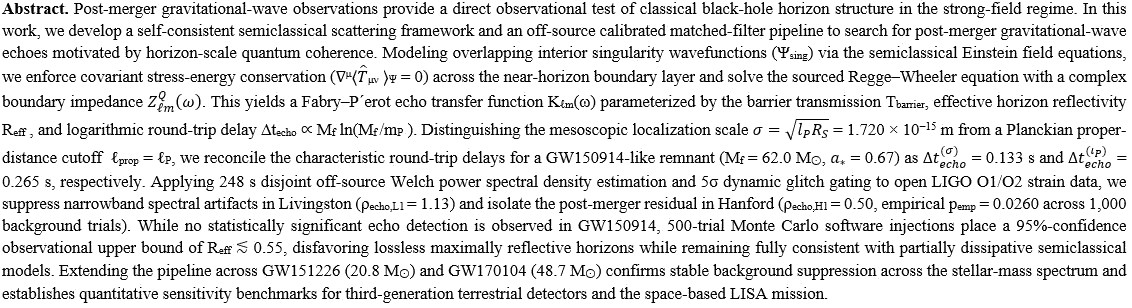
A Phenomenological Framework and Exploratory Post-Merger Search for Gravitational-Wave Echoes from Quantum-Corrected Horizons 0.2 MB
Tushar Sen
Pages: 456-469
A Stochastic Interpretation of Dark Energy from Sparse Microscopic Reactions in Cosmic Cauldrons 0.5 MB
Tushar Sen
Pages: 470-504
Abstract. Standard cosmological models typically invoke a global cosmological constant (Λ) or dynamical scalar fields to explain the accelerated expansion of the universe. In this work, we propose an alternative stochastic-emergent framework in which vacuum-like cosmological behavior arises from microscopic transport processes operating across an overlapping network of local reaction domains. Space is modeled as a statistical fabric composed of discrete “cauldrons” defined at approximately the 1 cm3 scale. These cauldrons are treated as rigid proper volumes whose internal stochastic interactions do not dilute under global cosmic expansion. Instead, the large-scale expansion manifests through the continual emergence and overlap of sparse microscopic domains embedded within an overwhelmingly empty spatial background. Each cauldron contains only a small number of randomly interacting particles, characterized by stochastic decay constants, random collision pathways, and probabilistic energy-transfer channels. Energy exchange
between overlapping cauldrons generates a transport network whose ensemble-averaged energy density approaches an approximately volume-invariant steady state. Under this condition, the emergent effective pressure naturally converges toward a vacuum-like equation of state with ω ≈ −1. The framework is evaluated through a 100,000-realization Monte Carlo simulation using Latin Hypercube Sampling and tested against the Pantheon+ supernova compilation and Planck PSZ2 cluster catalogue. The resulting expansion histories remain observationally degenerate with standard ΛCDM cosmology across current observational precision. Rather than replacing general relativity or the cosmological constant paradigm, the proposed model offers a possible microscopic statistical interpretation for the emergence of dark-energy-like behavior from sparse stochastic transport processes.